
Evidence · Case studies
The India bio-store case: UPI already won checkout — personal handles did not
Public payments data and industry reports, not a SuperKreator customer. The pattern: India already pays on UPI; most creators still collect like a kirana QR.
Last updated September 10, 2026 · 11 min read · Edited by SuperKreator editorial (Graphity Technology Private Limited)
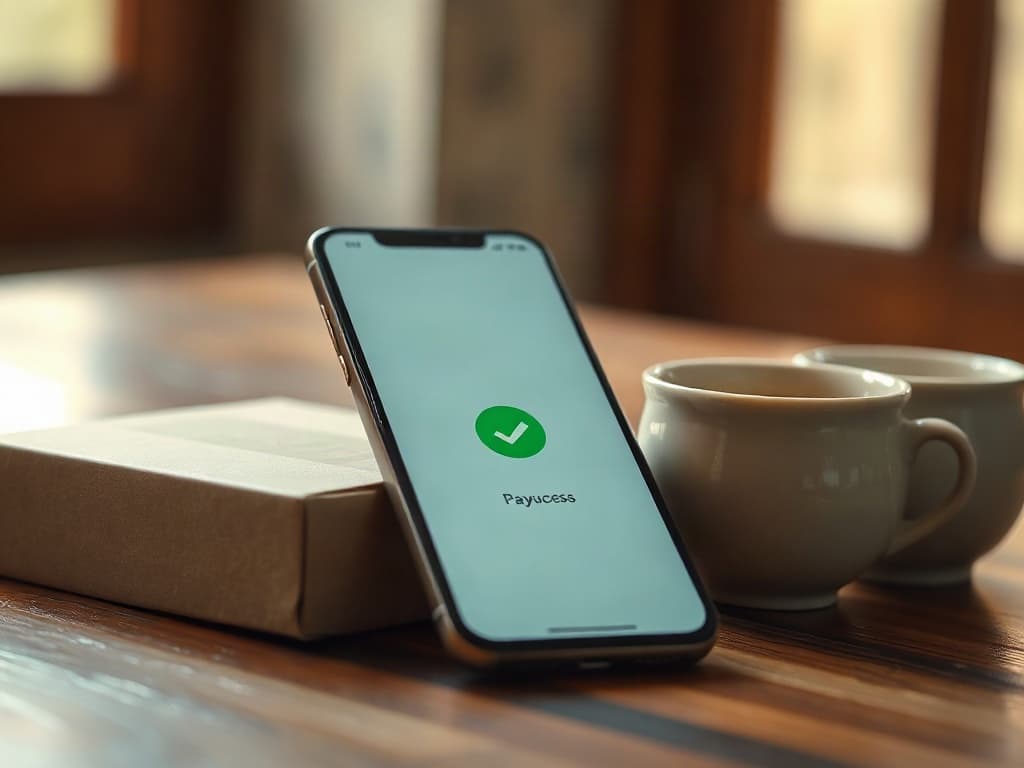
This is not a SuperKreator customer story. SuperKreator is new enough that publishing invented “we 10x’d this coach” numbers would be marketing, not a case study.
The useful case is the market itself: India already settled on a payment rail, the creator base is large and mostly nano, and a shocking number of sellers still run commerce as “UPI me ₹499 and send a screenshot.” The sources below are government, a business-school report, an industry survey covered by ET BrandEquity, and a payment-company explainer. None of them were commissioned by SuperKreator. None of them were independently re-audited by us.
If you only remember one sentence: UPI won. Personal UPI IDs did not become stores.
What the rail actually looks like in 2026
A Ministry of Finance reply in the Lok Sabha, published by PIB on 20 July 2026, is the cleanest official snapshot we have:
- 55.49 crore users onboarded on UPI as of June 2026 (NPCI figure, via the minister).
- FY 2025-26: 24,161.69 crore transactions by volume, ₹314.23 lakh crore by value.
A later PIB note for UPI’s tenth year (24 August 2026) rounds the same fiscal year to 24,162 crore volume and ₹314 lakh crore value, and prints NPCI’s “at a glance” table: UPI was 84% of India’s digital payments in FY 2025-26, and 49% of global real-time payment volume in 2025. Daily average volume in 2026 is listed as 66 crore transactions. July 2026 is listed as the record month: 2,366 crore transactions, ₹29.88 lakh crore. Business Line, citing NPCI, reports the same July month as 23.66 billion transactions (2,366 crore) and ₹29.88 lakh crore, up 4.1% in volume from June.
That is the environment an Instagram buyer already lives in. They do not need to be taught “digital payments.” They need a merchant flow that looks like every other UPI tap.
The same tenth-year note is useful for ticket size. Person-to-merchant (P2M) is 63% of UPI volume but not of value (P2P still dominates value). 86% of P2M transactions are below ₹500. A ₹199 PDF and a ₹499 workshop sit inside how India already pays. A ₹1.5 lakh mastermind does not — most single UPI transactions still sit under a ₹1 lakh cap (Razorpay’s 6 August 2026 creator guide restates that RBI/bank limit, with higher caps only for select categories).
Who is trying to sell into that rail
The ISB Srini Raju Centre and HashFame report Understanding the Canvas of India’s Creator Economy (2025 data) is the best public description of the seller side we found:
- Creator base 0.96 million (2020) → 4.12 million (2025).
- Non-metro creators are 66% of that base by 2025 — 2.72 million of 4.12 million. They crossed 50% in 2021.
- Non-metro supply grew 6.4× over the period vs 2.6× in metros.
- More than half of non-metro creators are nano (1,000–10,000 followers); nano + micro (to 100,000) are more than 80% of the non-metro base.
The same report is blunt about brand-deal income. A nano creator completing two campaigns a year, using their stated 2025 spend midpoint and a 30% take-rate, is modelled at about ₹5,000 a month — roughly 29% of the average rural salaried wage and 20% of the average urban salaried wage. Most creators still do about one paid brand campaign a year. That is not an argument against selling. It is an argument that waiting for brand deals is not a business, especially outside metros.
Kofluence’s Decoding Influence 2026, as summarised by ET BrandEquity, rhymes with that picture even though the methodology is a vendor survey (2 million+ creators in their dataset, 1,000+ surveys — not SuperKreator’s numbers, not ISB’s):
- 4.0–4.4 million active professionals; Instagram primary for 3.3–3.7 million.
- 61.1% of surveyed creators in the nano tier (1,000–10,000).
- 15.2% registered as a business entity or GST individual.
- 93.1% of surveyed brands name Instagram as their primary influencer channel.
Two reports, two methodologies, same operational fact: the typical Indian creator is Instagram-native, small-audience, and still informal. The shop has to work for that person, not for a US creator with a million followers and Stripe.
Why a personal UPI ID is not a store
Razorpay’s creator explainer (6 August 2026) is a vendor page selling Razorpay links. Treat it that way. The structural list is still the right diagnosis, because it matches what breaks in the DMs:
- No order mapping. A ₹500 credit is not “PDF vs consult vs merch.”
- No automated confirmation. Screenshot-as-receipt is the product.
- No refund workflow. Reverse UPI from a savings account is not an audit trail.
- No GST-ready invoice. Razorpay summarises the usual thresholds: GST registration generally once turnover crosses ₹40 lakh (goods) or ₹20 lakh (services) in most states, lower in special-category states. Confirm with a CA; we are not your tax advisor.
- No reconciliation. Tax season becomes a bank-feed archaeology project.
Razorpay also writes that cart abandonment averages above 70% when you add payment friction. That figure is their claim on that page (they sell checkout). It is in the same ballpark as widely cited global cart-abandonment studies; it is not a SuperKreator measurement of Indian creator funnels. Use it as a warning about extra steps, not as a conversion forecast.
What SuperKreator actually ships against this list: a public page at /{username}, INR products, Cashfree UPI/cards/net banking, file unlock after payment verify, plus dashboard AutoDM, Planner, and 24/7 LIVE. We do not currently publish a SuperKreator percentage take on sales. Processor fees still apply. This case is about the merchant rail — not a promise that LIVE or AutoDM will invent demand.
What this does not prove
It does not prove that Indian creators should all use SuperKreator. Superprofile is a mature UPI store with AutoDM already in market. A Razorpay payment page in a Linktree can be enough. Graphy is the campus when you need an LMS.
It does not prove a revenue multiple. PIB counts national UPI. ISB counts creators, mostly still shallow on brand income. Kofluence counts Instagram concentration. Razorpay counts why a handle fails. Stitching those into “therefore ₹X GMV” would be fiction.
The operator lesson is narrower: put UPI checkout on the one link Instagram gives you, map money to SKUs, and stop running GST season from WhatsApp screenshots. That is the case. How to turn that on in SuperKreator is a separate, shorter document.
Conclusion
The public numbers do not prove that SuperKreator converts better than a QR. They prove that the default buyer behaviour is already UPI, that most Indian creators are not celebrity accounts, and that a handle is not an order system.
If you want the bio and the rupee checkout on one username, start SuperKreator for free. Read getting started for what that actually turns on. Keep Superprofile if you already rely on their course LMS and AutoDM bundle; SuperKreator ships Cashfree checkout plus AutoDM, Planner, and LIVE in the same workspace.
Frequently asked questions
Is this a SuperKreator customer case study?+
No. SuperKreator has not published customer revenue. This piece uses government UPI statistics, the ISB–HashFame creator-economy report, Kofluence figures as reported by ET BrandEquity, and a Razorpay explainer. We did not independently audit those organisations.
Why quote Razorpay if SuperKreator uses Cashfree?+
Because the failure mode (personal UPI ID as a shop) is independent of which Indian aggregator you pick. Razorpay described the gaps clearly. SuperKreator’s live checkout is Cashfree. Do not read this as a Razorpay partnership announcement.
Do I need GST before I sell a ₹499 PDF?+
Not automatically. GST registration is generally triggered by turnover thresholds that vary by goods vs services and by state. The ₹40 lakh / ₹20 lakh figures are the usual mainland summary Razorpay restates. Ask a chartered accountant for your facts.
Sources
Figures, prices, and vendor claims change. Prefer the original page over this list.
- PIB — UPI users and FY 2025-26 volume/value (Lok Sabha reply) · accessed 2026-09-10
- PIB — UPI at 10 years, NPCI key statistics table · accessed 2026-09-10
- Business Line — July 2026 UPI monthly record (NPCI data) · accessed 2026-09-10
- ISB–HashFame — Understanding the Canvas of India’s Creator Economy (PDF) · accessed 2026-09-10
- ET BrandEquity — Kofluence Decoding Influence 2026 coverage · accessed 2026-09-10
- Razorpay — link-in-bio stores with UPI (6 Aug 2026) · accessed 2026-09-10
SuperKreator
Bio, UPI store, and the rest of the workspace — free to start.
India-first ladder on the homepage: Creator ₹99/month (₹9 first month, highlighted), Free ₹0, Live ₹499/month, Business custom. GST extra. Cashfree processor fees apply on sales. SuperKreator does not currently publish a platform seller-fee percentage.
Related

Guides
The India creator stack: bio, store, AutoDM, calendar — and when one vendor is enough
Most Indian creators do not need five subscriptions. They need a clear job for each tool — and permission to delete the rest.
Updated 2026-09-10 · 9 min
Docs
Getting started with SuperKreator
Sign in with Google, claim a name, publish a page, add a product, and take a test payment. That is the whole first hour.
Updated 2026-09-15 · 6 min
Competitor guides
Superprofile — India’s creator store and AutoDM stack, explained without the pitch
Superprofile (also styled SuperProfile) is an India-first creator toolkit: link-in-bio store, UPI checkout, courses and bookings, lead magnets, and Instagram AutoDM. It is the closest full-stack competitor to SuperKreator for Indian creators.
Updated 2026-09-10 · 14 min
Case studies
@technovert.yogi’s one-reel AutoDM: what Superprofile published, and what it does not prove
A vendor-published Instagram comment-to-DM story from India. Useful as a playbook. Useless as a revenue forecast — Superprofile never published rupees.
Updated 2026-09-10 · 8 min